
Easter
POPE LEO - CHRISM MASS MESSAGE 2026
Excerpt from Pope Leo's Chrism Mass Homily 2026
Dear brothers and sisters,
We are now on the threshold of the Easter Triduum. Once again, the Lord will lead us to the culmination of his mission, so that his passion, death and resurrection may become the heart of our mission. What we are about to relive, in fact, possesses the power to transform what human pride generally tends to harden: our identity and our place in the world. Jesus’ freedom changes hearts, heals wounds, refreshes and brightens our faces, reconciles and gathers us together, and forgives and raises us up.
In this, my first year presiding over the Chrism Mass as Bishop of Rome, I would like to reflect with you on the mission to which God calls us as his people. It is the Christian mission, the very same as Jesus’, not another. Each of us takes part in it according to our own vocation in a deeply personal obedience to the voice of the Spirit, yet never without others, never neglecting or breaking communion! Bishops and priests, as we renew our promises, we are at the service of a missionary people. Together with all the baptized, we are the Body of Christ, anointed by his Spirit of freedom and consolation, the Spirit of prophecy and unity.
Dear friends, we follow Jesus who “did not regard equality with God as something to be exploited, but emptied himself” (Phil 2:6-7). Every mission begins with that kind of self-emptying in which everything is reborn. Our dignity as sons and daughters of God cannot be taken from us, nor can it be lost, but neither can the affections, places, and experiences at the start of our lives be erased. We are heirs to so much good and, at the same time, to the limitations of a history into which the Gospel must bring light and salvation, forgiveness and healing. Thus, there is no mission without reconciliation with our past, with the gifts and limitations of the upbringing we have received; but, at the same time, there is no peace without setting out, no awareness without detachment, no joy without risk. We are the Body of Christ if we move forward, coming to terms with the past without being imprisoned by it: everything is restored and multiplied if it is first let go, without fear. This is a fundamental secret of mission. It is not something that is experienced just once, but in every new beginning, in every new sending forth.
Jesus’ journey reveals to us that the willingness to lose oneself, to empty oneself, is not an end in itself, but a condition for encounter and intimacy. Love is true only when it is unguarded; it requires little fuss, no ostentation, and gently cherishes weakness and vulnerability. We struggle to commit ourselves to a mission that exposes us in this way, and yet there is no “good news to the poor” (cf. Lk 4:18) if we go to them bearing the signs of power, nor is there authentic liberation unless we free ourselves from attachment. Here we touch upon a second secret of the Christian mission. After detachment comes the law of encounter. We know that throughout history, mission has not infrequently been distorted by a desire for domination, entirely foreign to the way of Jesus Christ. Saint John Paul II had the clarity and courage to recognize that “because of the bond which unites us to one another in the Mystical Body, all of us, though not personally responsible and without encroaching on the judgment of God who alone knows every heart, bear the burden of the errors and faults of those who have gone before us.” [1]
There is also a third dimension, perhaps the most radical, of the Christian mission. The dramatic possibility of misunderstanding and rejection, which is already seen in the violent reaction of the people of Nazareth to Jesus’ words. “When they heard this, all in the synagogue were filled with rage. They got up, drove him out of the town, and led him to the brow of the hill on which their town was built, so that they might hurl him off the cliff” (Lk 4:28-29). Although the liturgical reading has omitted this part, what we are about to celebrate this evening calls on us not to flee, but to “pass through” the trial, just as Jesus did. Jesus “passed through the midst of them and went on his way” (Lk 4:30). The cross is part of the mission: the sending becomes more bitter and frightening, but also more freeing and transformative. The imperialist occupation of the world is thus disrupted from within; the violence that until now has been the law is unmasked. The poor, imprisoned, rejected Messiah descends into the darkness of death, yet in so doing he brings a new creation to light.
PAPA LEÓN — MENSAJE DE LA MISA CRISMAL 2026
Extracto de la Homilía de la Santa Misa Crismal del Papa Leo 2026
Queridos hermanos y hermanas:
Nos encontramos ya en el umbral del Triduo Pascual. Una vez más, el Señor nos llevará a la cumbre de su misión, para que su pasión, muerte y resurrección se conviertan en el corazón de nuestra misión. Lo que estamos a punto de revivir, de hecho, tiene en sí la fuerza de transformar aquello que el orgullo humano tiende generalmente a endurecer: nuestra identidad, nuestro lugar en el mundo. La libertad de Jesús cambia el corazón, sana las heridas, perfuma y hace brillar nuestros rostros, reconcilia y reúne, perdona y resucita.
En este primer año en el que presido la Misa Crismal como Obispo de Roma, deseo reflexionar con ustedes sobre la misión a la que Dios nos consagra como su pueblo. Es la misión cristiana, la misma de Jesús, no otra. En ella participa cada uno según su propia vocación y en una obediencia muy personal a la voz del Espíritu, ¡pero nunca sin los demás, nunca descuidando o rompiendo la comunión! Obispos y presbíteros, al renovar nuestras promesas, estamos al servicio de un pueblo misionero. Somos, junto con todos los bautizados, el Cuerpo de Cristo, ungidos por su Espíritu de libertad y de consuelo, Espíritu de profecía y de unidad.
Queridos hermanos, nosotros seguimos a Jesús, quien «no consideró la igualdad con Dios como algo que debía guardar celosamente: al contrario, se anonadó a sí mismo» (Flp 2,6-7). Toda misión comienza con ese tipo de vaciamiento en el que todo renace. Nuestra dignidad de hijos e hijas de Dios no nos puede ser quitada, ni se puede perder, pero tampoco pueden borrarse los afectos, los lugares y las experiencias que están en el origen de nuestra vida. Somos herederos de tanto bien y, al mismo tiempo, de los límites de una historia en la que el Evangelio debe llevar luz y salvación, perdón y sanación. Así, la misión comienza por la reconciliación con nuestros orígenes, con los dones y los límites de la formación recibida; al mismo tiempo, no hay paz sin el valor de partir, no hay conciencia sin la audacia del desprendimiento, no hay alegría sin arriesgar. Somos el Cuerpo de Cristo si nos ponemos en movimiento, saliendo de nosotros mismos, haciendo las paces con el pasado sin quedarnos prisioneros de él: todo se recupera y se multiplica si primero se deja ir, sin miedo. Es un primer secreto de la misión. Y no se experimenta una sola vez, sino en cada nuevo comienzo, en cada ulterior envío.
El camino de Jesús nos revela que la disponibilidad para perder, para vaciarse, no es un fin en sí misma, sino una condición para el encuentro y la intimidad. El amor sólo es verdadero si está desarmado, necesita pocas cosas, ninguna ostentación, y custodia con delicadeza la debilidad y la desnudez. Nos cuesta lanzarnos a una misión tan expuesta, y sin embargo no hay «buena nueva para los pobres» (cf. Lc 4,18) si acudimos a ellos con signos de poder, ni hay auténtica liberación si no nos liberamos de la posesión. Aquí tocamos un segundo secreto de la misión cristiana. Tras el desprendimiento está la ley del encuentro. Sabemos que, a lo largo de la historia, la misión ha sido no pocas veces trastocada por lógicas de dominio, totalmente ajenas al camino de Jesucristo. San Juan Pablo II tuvo la lucidez y el valor de reconocer que «por el vínculo que une a unos y otros en el Cuerpo místico, y aún sin tener responsabilidad personal ni eludir el juicio de Dios, el único que conoce los corazones, somos portadores del peso de los errores y de las culpas de quienes nos han precedido». [1]
Existe además una tercera dimensión, quizá la más radical, de la misión cristiana. Ya en la violenta reacción de los habitantes de Nazaret ante las palabras de Jesús se manifiesta la dramática posibilidad de la incomprensión y del rechazo: «Al oír estas palabras, todos los que estaban en la sinagoga se enfurecieron y, levantándose, lo empujaron fuera de la ciudad, hasta un lugar escarpado de la colina sobre la que se levantaba la ciudad, con intención de despeñarlo» (Lc 4,28-29). Aunque la lectura litúrgica haya omitido esta parte, lo que nos disponemos a celebrar a partir de esta tarde nos compromete a no huir, sino a “pasar en medio” de la prueba, como Jesús, quien, arrastrado por la gente hasta el borde del precipicio, «pasando en medio de ellos, continuó su camino» (Lc 4,30). La cruz es parte de la misión; el envío se vuelve más amargo y atemorizante, pero también más gratuito y revolucionario. La ocupación imperialista del mundo se ve entonces interrumpida desde dentro, la violencia que hasta hoy se erige en ley queda desenmascarada. El Mesías pobre, prisionero, oprimido, se precipita en la oscuridad de la muerte, pero así saca a la luz una nueva creación.
If you would like to make your Easter donation online, please click the picture to the left. Thank you for being a blessing to the Presentation of the Blessed Virgin Mary Catholic Church!
Easter Sunday (both Vigil and Easter daytime celebrations) is the peak of our Catholic faith and the greatest Feast Day—the Resurrection of the Lord! It ranks first because our entire faith hinges on it. As Paul said, “If Christ has not been raised, your faith is in vain” (1 Cor 15:17). “Christ has been raised from the dead, the first fruits of those who have fallen asleep.” (1 Cor 15:20) Jesus Christ is risen today! Alleluia!
El Domingo de Pascua (tanto la Vigilia como las celebraciones diurnas de Pascua) es la cima de nuestra fe Católica y el día de fiesta más grande: ¡la Resurrección del Señor! Ocupa el primer lugar porque toda nuestra fe depende de él. Como dijo Pablo: “Si Cristo no resucitó, vana es vuestra fe” (1 Cor 15,17). “Cristo ha resucitado de entre los muertos, primicia de los que durmieron”. (1 Cor 15:20) ¡Jesucristo ha resucitado hoy! ¡Aleluya!
EASTER - RESOURCES IN ENGLISH
NATIONAL EUCHARISTIC REVIVAL
SUNDAY MASS CONNECTION — At every Mass, Jesus offers himself to the Father for us. We can always join our own offerings with Jesus at Mass. This Sunday, offer your desire to radiate the light of the Resurrection. Ask for a deepening of Christ’s grace so you can be his light for others.
LOVE IN ACTION — During Easter, we are called to be instruments of new life for all our brothers and sisters, especially through choices of love and solidarity. May each of us leave the tombs of our doubts and fears so that we can help meet the spiritual and material needs of others, especially through our prayers, offerings, and acts of charity and accompaniment, which are powerful channels of grace for all hearts.
FORMED
Not yet on FORMED?
- Visit http://signup.formed.org/.
- Enter our parish’s zip code or name.
- Enter your name and email.
May God bless you during this special season!
DAILY REFLECTIONS
DAILY REFLECTIONS
Continue a daily spiritual discipline with these powerful reflections from Dr. Tim Gray, president of the Augustine Institute. In these short, daily videos Dr. Gray comments on the daily Mass readings, explains the Scriptures, and provides you with concrete ideas on how to apply them to your life. This Easter, grow in your relationship with Christ in his Word with Dr. Gray so that you can enjoy the richness of our faith as never before.
PRESENCE: THE MYSTERY OF THE EUCHARIST
PRESENCE: THE MYSTERY OF THE EUCHARIST
Although the Eucharist appears to be simple bread and wine, it is actually the "source and summit" of the Christian life. Presence: The Mystery of the Eucharist explores the truth and beauty of Christ's real presence in the Eucharist, from its origins in Sacred Scripture, to its profound role in the life of the Church and her members. It is the crescendo of the entire story of salvation.
DIVINE MERCY IN THE SECOND GREATEST STORY EVER TOLD
The SHOCKING News of Easter Sunday | Chris Stefanick Show
Way to go, everyone! We got through Lent and made it to Easter!
So… what happens now? (And I don’t mean trading fish and fasting for chocolate and jellybeans.) You see, we’re not going back to our normal lives again. Because Jesus has RISEN from the dead.
And that’s shocking news.
The story of Easter literally changed the entire world. And it literally changes YOUR story too.
THE WILD GOOSE - DISCOVERING A DEEPER RELATIONSHIP WITH THE HOLY SPIRIT
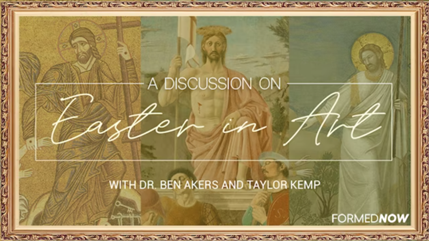
Easter in Art (3-Part Series)
Join Dr. Ben Akers and
Taylor Kemp, as they sit down to discuss a famous Christian artwork and the theology behind it.
Part 1: The Harrowing of Hell
A discussion on a famous painting of Jesus's descent into hell and the theology behind it.
Part 2: The Resurrection
A discussion on a famous painting of the Resurrection of Christ and the theology behind it.
Part 3: Mary Magdalene
A discussion on a famous painting of Jesus's encounter with Mary Magdalene following the Resurrection and the theology behind it.
PASCUA - RECURSOS EN ESPAÑOL
AVIVAMIENTO EUCARÍSTICO NACIONAL
CONEXIÓN CON LA MISA DOMINICAL: En cada Misa, Jesús se ofrece al Padre por nosotros. Siempre podemos unir nuestras propias
ofrendas con Jesús en la Misa. Este domingo, ofrece tu deseo de irradiar la luz de la Resurrección. Pide una profundización de la gracia
de Cristo para que puedas ser su luz para los demás.
EL AMOR EN ACCIÓN: Durante la Pascua, estamos llamados a ser instrumentos de nueva vida para todos nuestros hermanos y
hermanas, especialmente a través de opciones de amor y solidaridad. Que cada uno de nosotros abandone las tumbas de nuestras
dudas y temores para que podamos ayudar a satisfacer las necesidades espirituales y materiales de los demás, especialmente a través
de nuestras oraciones, ofrendas y actos de caridad y acompañamiento, que son poderosos canales de gracia para todos los corazones.
FORMED
¡Disfruta de FORMED de manera fácil y gratuita!
- Ingresa a http://signup.formed.org/.
- Selecciona tu parroquia
- Inscríbete usando tu nombre y correo electrónico
- Revisa tu correo y sigue la liga para que comiences a usar FORMED
¡Que Dios los bendiga durante esta temporada especial!
PRESENCE: THE MYSTERY OF THE EUCHARIST
PRESENCIA: EL MISTERIO DE LA EUCARISTÍA
¿Por qué es tan especial la Eucaristía para los católicos? Aun cuando a simple vista solo parece ser pan y vino, es en realidad la "fuente y cumbre" de la vida cristiana. Presencia: El Misterio de la Eucaristía explora la verdad y la belleza de la presencia real de Cristo en la Eucaristía, desde sus orígenes en la Sagrada Escritura, hasta su profundo rol en la vida de la Iglesia y sus miembros. Es el crescendo de la Historia de Salvación.

THE WILD GOOSE - DISCOVERING A DEEPER RELATIONSHIP WITH THE HOLY SPIRIT
THE WILD GOOSE EN ESPAÑOL CON FR. DAVE PIVONKA
The Wild Goose es una obra del Espíritu Santo, que está despertando en los corazones de todos los participantes, el amor y poder transformador de Dios. Este es un amor que nos ha sido revelado por Jesucristo y que nos conduce a nuestro Padre Celestial. Estaré orando continuamente mientras usted pasa por esta serie, para que el Espíritu Santo sople vida dentro de su ser.