Lent 2026
MESSAGE OF HIS HOLINESS POPE LEO FOR LENT 2025
Dear brothers and sisters,
Lent is a time in which the Church, guided by a sense of maternal care, invites us to place the mystery of God back in the center of our lives, in order to find renewal in our faith and keep our hearts from being consumed by the anxieties and distractions of daily life.
Every path towards conversion begins by allowing the word of God to touch our hearts and welcoming it with a docile spirit. There is a relationship between the word, our acceptance of it and the transformation it brings about. For this reason, the Lenten journey is a welcome opportunity to heed the voice of the Lord and renew our commitment to following Christ, accompanying him on the road to Jerusalem, where the mystery of his passion, death and resurrection will be fulfilled.
Listening: This year, I would first like to consider the importance of making room for the word through listening. The willingness to listen is the first way we demonstrate our desire to enter into relationship with someone. . . . Our God is one who seeks to involve us. Even today he shares with us what is in his heart. Because of this, listening to the word in the liturgy teaches us to listen to the truth of reality.
Fasting: If Lent is a time for listening, fasting is a concrete way to prepare ourselves to receive the word of God. Abstaining from food is an ancient ascetic practice that is essential on the path of conversion. Precisely because it involves the body, fasting makes it easier to recognize what we “hunger” for and what we deem necessary for our sustenance. Moreover, it helps us to identify and order our “appetites,” keeping our hunger and thirst for justice alive and freeing us from complacency. Thus, it teaches us to pray and act responsibly towards our neighbor. However, in order to practice fasting in accordance with its evangelical character and avoid the temptation that leads to pride, it must be lived in faith and humility. . . . In this regard, I would like to invite you to a very practical and frequently unappreciated form of abstinence: that of refraining from words that offend and hurt our neighbor. Let us begin by disarming our language, avoiding harsh words and rash judgement, refraining from slander and speaking ill of those who are not present and cannot defend themselves. Instead, let us strive to measure our words and cultivate kindness and respect in our families, among our friends, at work, on social media, in political debates, in the media and in Christian communities. In this way, words of hatred will give way to words of hope and peace.
. . . Dear friends, let us ask for the grace of a Lent that leads us to greater attentiveness to God and to the least among us. Let us ask for the strength that comes from the type of fasting that also extends to our use of language, so that hurtful words may diminish and give way to a greater space for the voice of others. Let us strive to make our communities places where the cry of those who suffer finds welcome, and listening opens paths towards liberation, making us ready and eager to contribute to building a civilization of love.
I impart my heartfelt blessing upon all of you and your Lenten journey.
To read the full message, click here (En).
MENSAJE DEL SANTO PADRE LEO PARA LA CUARESMA 2026
Queridos hermanos y hermanas:
La Cuaresma es el tiempo en el que la Iglesia, con solicitud maternal, nos invita a poner de nuevo el misterio de Dios en el centro de nuestra vida, para que nuestra fe recobre su impulso y el corazón no se disperse entre las inquietudes y distracciones cotidianas.
Todo camino de conversión comienza cuando nos dejamos alcanzar por la Palabra y la acogemos con docilidad de espíritu. Existe, por tanto, un vínculo entre el don de la Palabra de Dios, el espacio de hospitalidad que le ofrecemos y la transformación que ella realiza. Por eso, el itinerario cuaresmal se convierte en una ocasión propicia para escuchar la voz del Señor y renovar la decisión de seguir a Cristo, recorriendo con Él el camino que sube a Jerusalén, donde se cumple el misterio de su pasión, muerte y resurrección.
Escuchar: Este año me gustaría llamar la atención, en primer lugar, sobre la importancia de dar espacio a la Palabra a través de la escucha, ya que la disposición a escuchar es el primer signo con el que se manifiesta el deseo de entrar en relación con el otro. . . . Es un Dios que nos atrae, que hoy también nos conmueve con los pensamientos que hacen vibrar su corazón. Por eso, la escucha de la Palabra en la liturgia nos educa para una escucha más verdadera de la realidad.
Ayunar: Si la Cuaresma es tiempo de escucha, el ayuno constituye una práctica concreta que dispone a la acogida de la Palabra de Dios. La abstinencia de alimento, en efecto, es un ejercicio ascético antiquísimo e insustituible en el camino de la conversión. Precisamente porque implica al cuerpo, hace más evidente aquello de lo que tenemos “hambre” y lo que consideramos esencial para nuestro sustento. Sirve, por tanto, para discernir y ordenar los “apetitos”, para mantener despierta el hambre y la sed de justicia, sustrayéndola de la resignación, educarla para que se convierta en oración y responsabilidad hacia el prójimo. Sin embargo, para que el ayuno conserve su verdad evangélica y evite la tentación de enorgullecer el corazón, debe vivirse siempre con fe y humildad. . . . Por eso, me gustaría invitarles a una forma de abstinencia muy concreta y a menudo poco apreciada, es decir, la de abstenerse de utilizar palabras que afectan y lastiman a nuestro prójimo. Empecemos a desarmar el lenguaje, renunciando a las palabras hirientes, al juicio inmediato, a hablar mal de quienes están ausentes y no pueden defenderse, a las calumnias. Esforcémonos, en cambio, por aprender a medir las palabras y a cultivar la amabilidad: en la familia, entre amigos, en el lugar de trabajo, en las redes sociales, en los debates políticos, en los medios de comunicación y en las comunidades cristianas. Entonces, muchas palabras de odio darán paso a palabras de esperanza y paz.
. . . Queridos hermanos, pidamos la gracia de vivir una Cuaresma que haga más atento nuestro oído a Dios y a los más necesitados. Pidamos la fuerza de un ayuno que alcance también a la lengua, para que disminuyan las palabras que hieren y crezca el espacio para la voz de los demás. Y comprometámonos para que nuestras comunidades se conviertan en lugares donde el grito de los que sufren encuentre acogida y la escucha genere caminos de liberación, haciéndonos más dispuestos y diligentes para contribuir a edificar la civilización del amor.
Los bendigo de corazón a todos ustedes, y a su camino cuaresmal.
Para leer el mensaje completo, haga clic aquí (Sp).
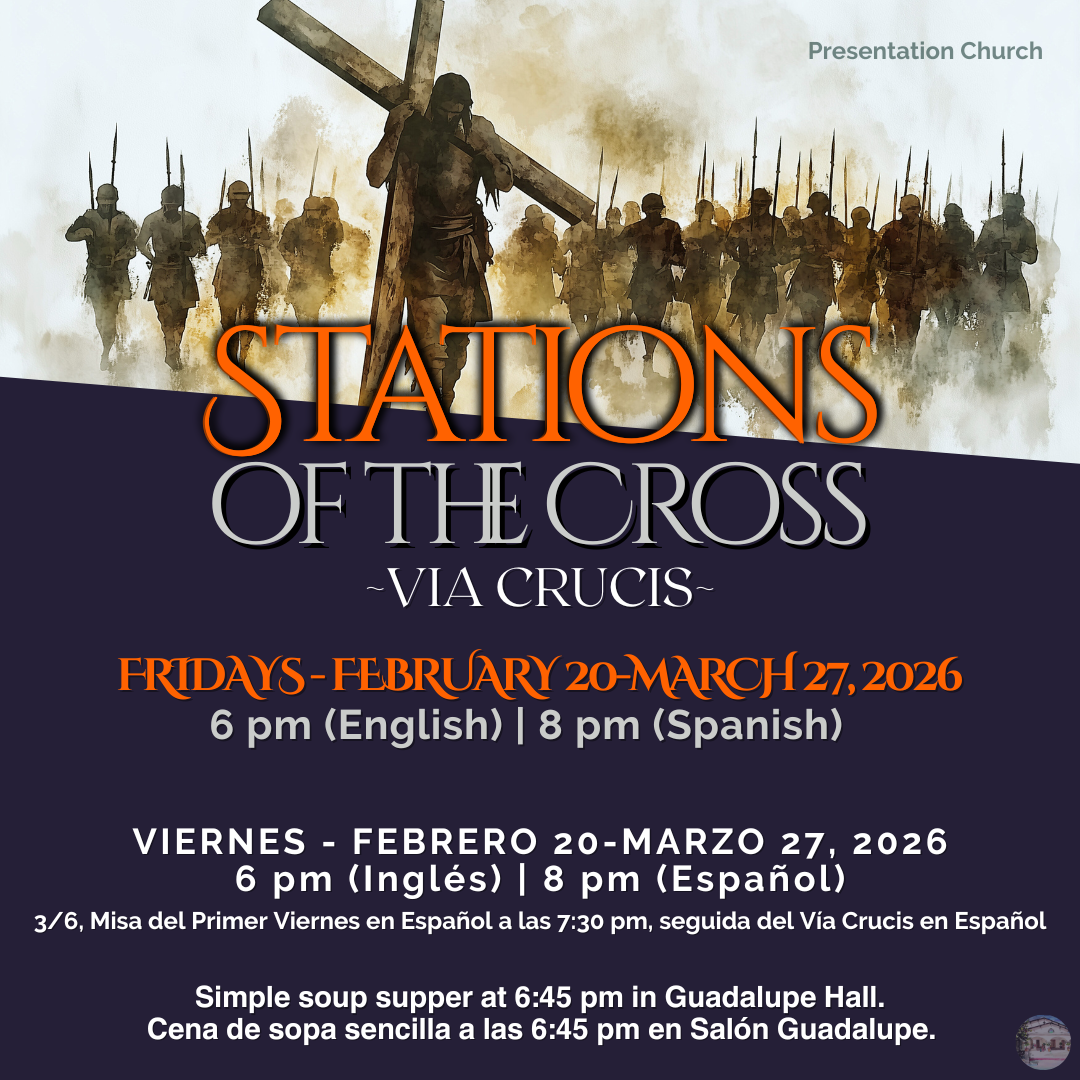
Preparing and Journeying Together Through Lent
We are not called to do only one, but all three pillars to prepare our hearts for Christ on Easter. As Catholics we take up the Lenten practices of prayer, fasting, and almsgiving every year. These practices help us to remember the merciful love and compassion that God shows all people. Participating in these practices, we journey with our community and God and toward the celebration of the Paschal Mystery of our Lord. We do not make this journey alone. The whole Church prepares for the celebration and together, along with those who are preparing to enter the Church at the Easter Vigil, we try to live more faithfully to God’s call to be merciful, loving, and compassionate to those around us. Our acts of love through sacrifice and prayer are a tangible witness of God’s love to those around us.
How will your Encounter with Lent 2026 go?
What is Lent?
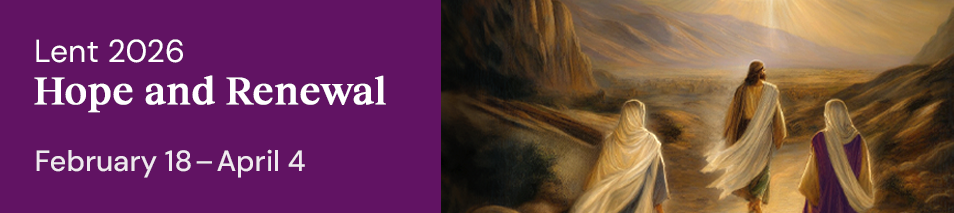
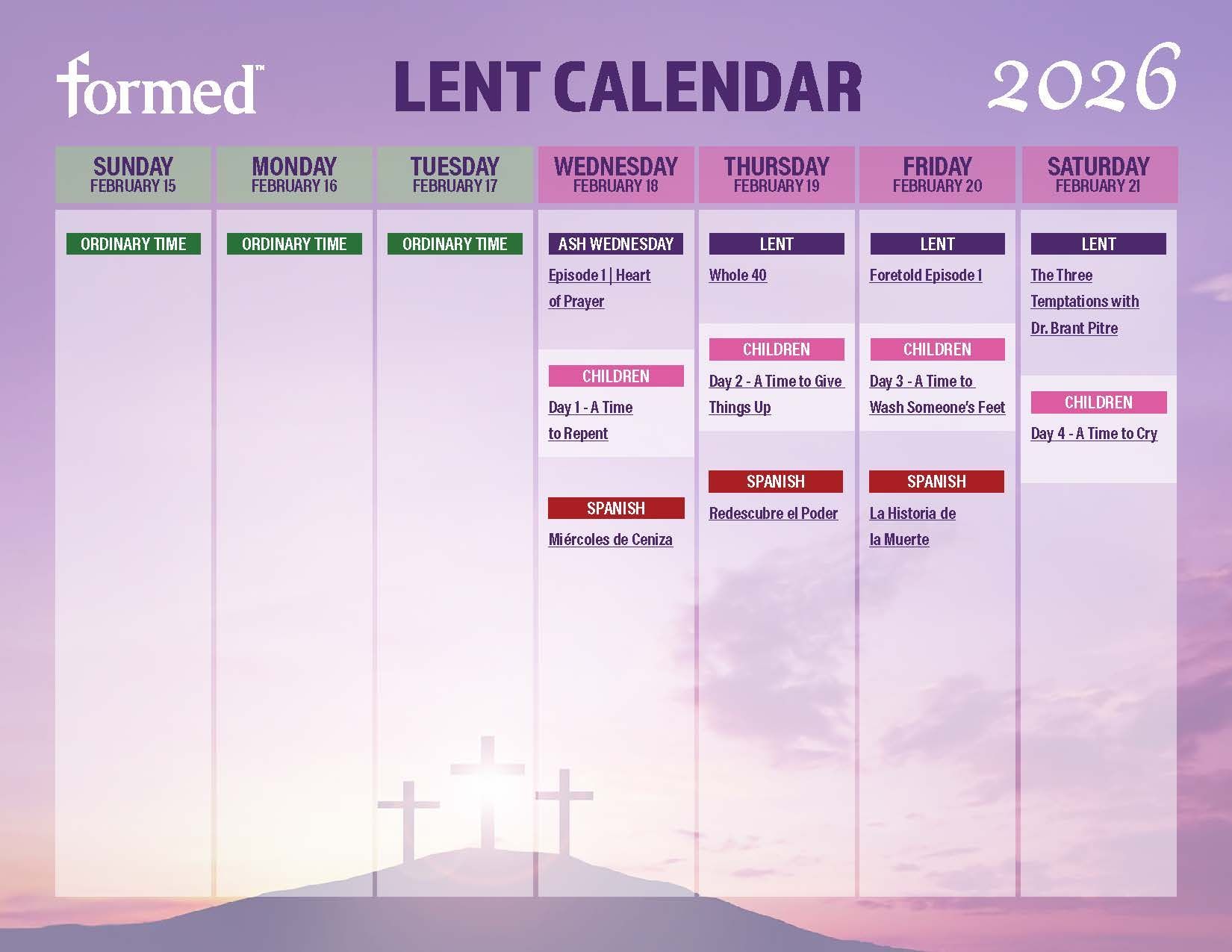
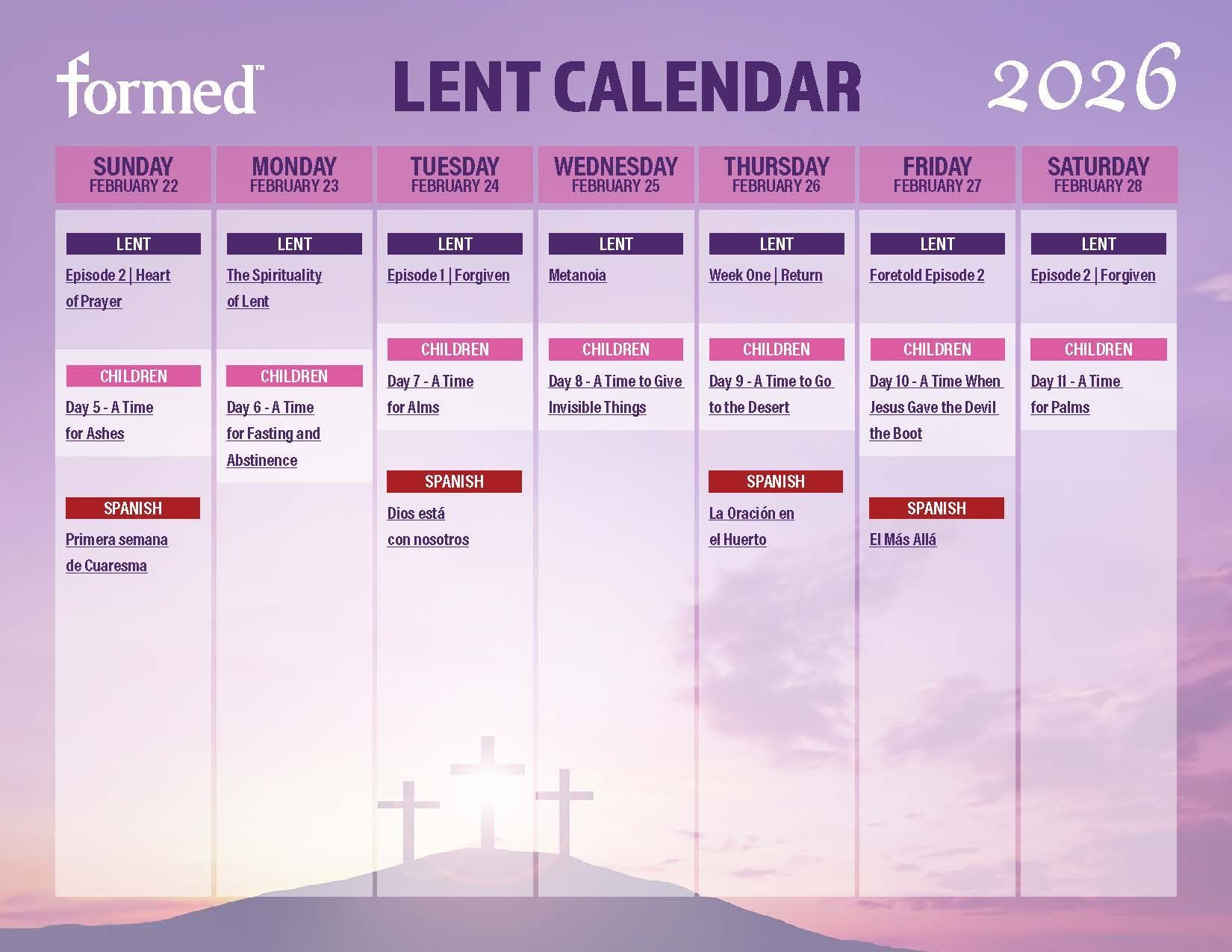
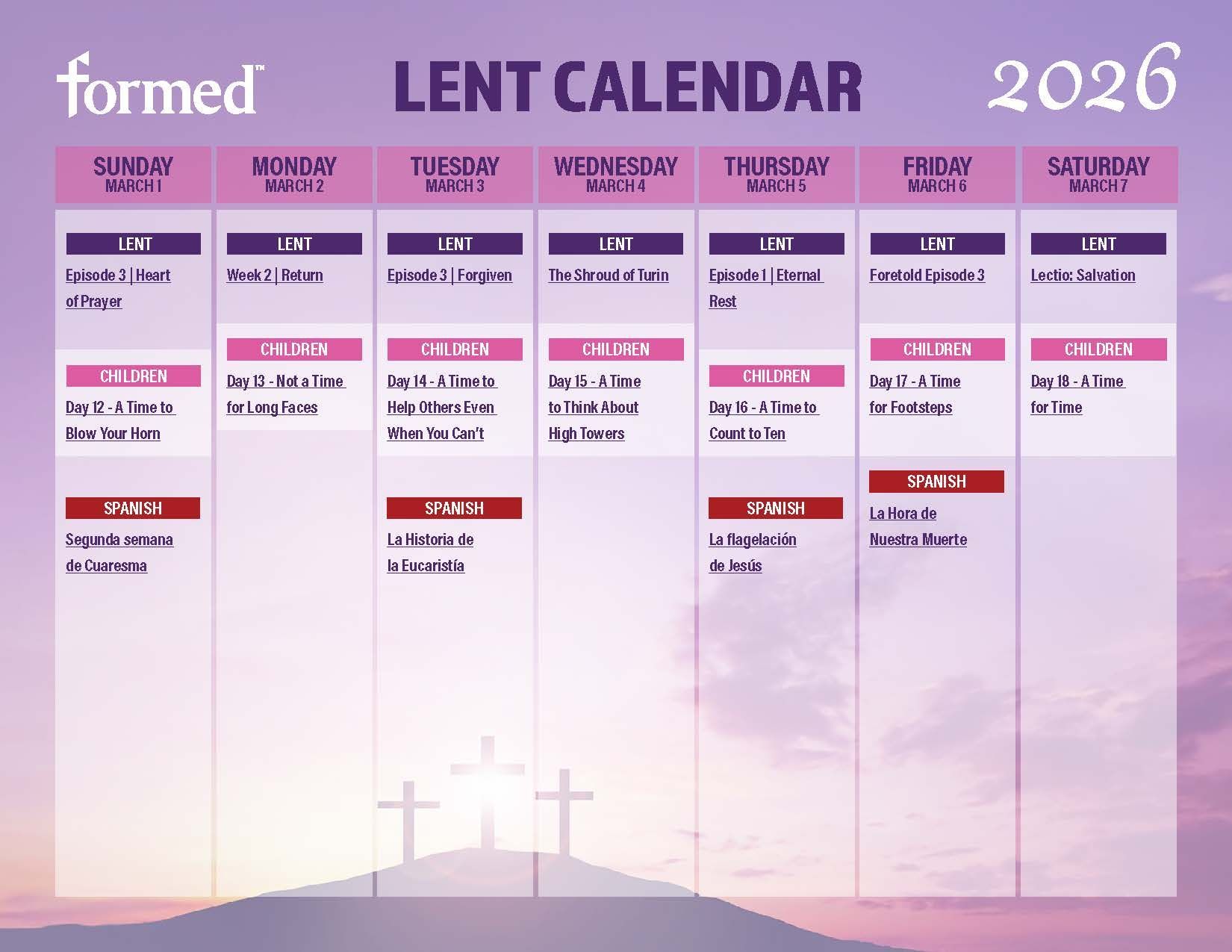
Lent 2026 starts on Ash Wednesday, February 18, and lasts until the beginning of the Evening Mass of the Lord's Supper on Holy Thursday.
Lent, derived from the word “springtime,” is a time of hope and spiritual renewal as we prepare to enter more fully into the Paschal Mystery of Christ’s passion, death and resurrection.
Lent is a 40 day season of prayer, fasting, and almsgiving that begins on Ash Wednesday and ends at sundown on Holy Thursday. It's a period of preparation to celebrate the Lord's Resurrection at Easter. During Lent, we seek the Lord in prayer by reading Sacred Scripture; we serve by giving alms; and we practice self-control through fasting. We are called not only to abstain from luxuries during Lent, but to a true inner conversion of heart as we seek to follow Christ's will more faithfully. We recall the waters of baptism in which we were also baptized into Christ's death, died to sin and evil, and began new life in Christ.
Many know of the tradition of abstaining from meat on Fridays during Lent, but we are also called to practice self-discipline and fast in other ways throughout the season. Contemplate the meaning and origins of the Lenten fasting tradition in this reflection. In addition, the giving of alms is one way to share God's gifts—not only through the distribution of money, but through the sharing of our time and talents. As St. John Chrysostom reminds us: "Not to enable the poor to share in our goods is to steal from them and deprive them of life. The goods we possess are not ours, but theirs." (Catechism of the Catholic Church, no. 2446).
In Lent, the baptized are called to renew their baptismal commitment as others prepare to be baptized through the Rite of Christian Initiation of Adults, a period of learning and discernment for individuals who have declared their desire to become Catholics.
https://www.usccb.org/prayer-worship/liturgical-year/lent
Let us bow low to Jesus, admit our sinfulness before him, and count on him to “complete the good work he has begun in us…” (cf. Phil 1:6).
Need a Lent refresher? The USCCB does a good overview of Lent here.
The Pillars of Lent: Fasting | Almsgiving | Prayer
Fasting
Lenten Pillar of FASTING
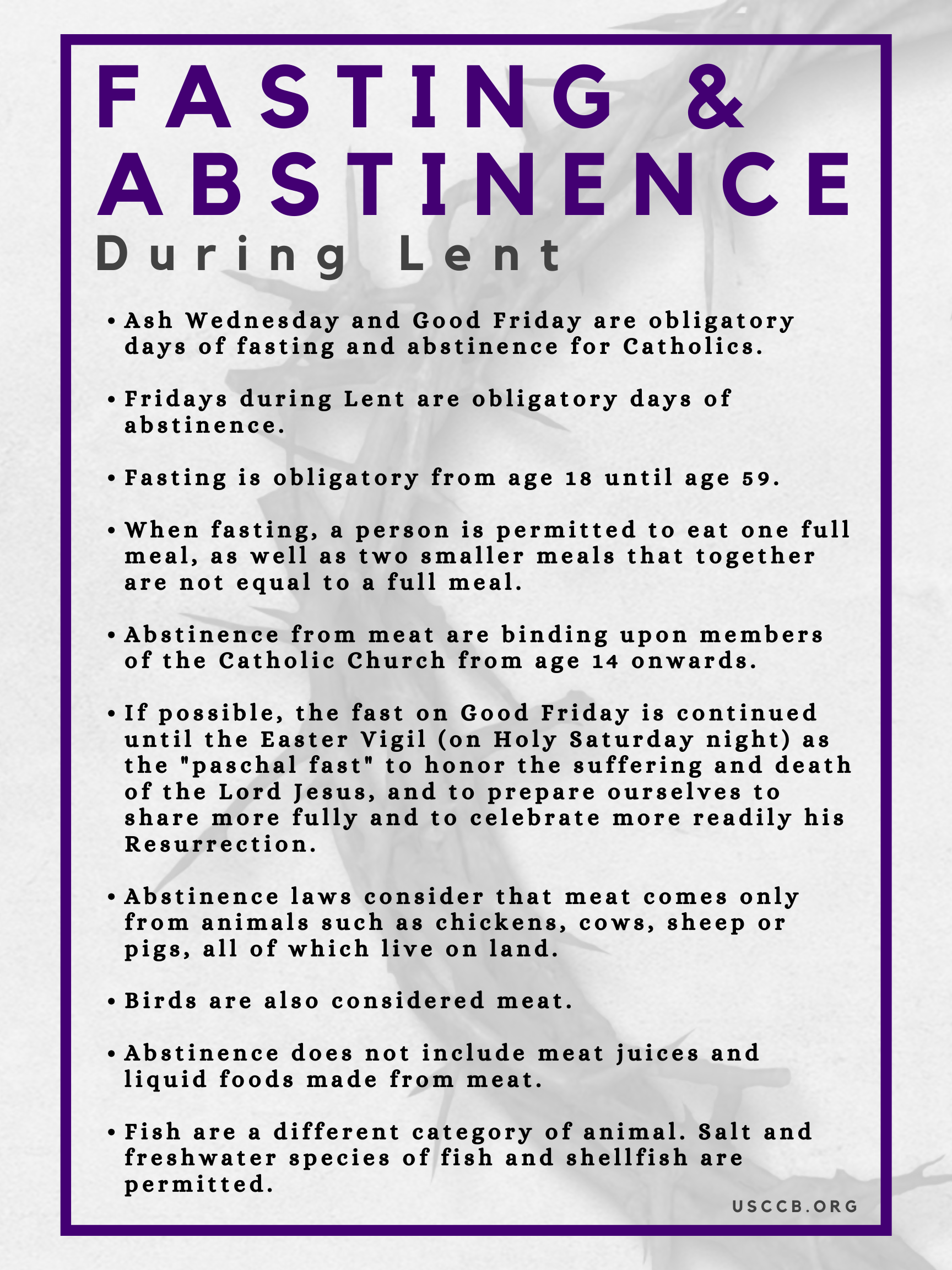
Beginning on Ash Wednesday and on all Fridays during Lent, all persons fourteen and older are bound by the law of abstinence— no meat.
On Ash Wednesday and Good Friday, all those who are eighteen, and not yet fifty-nine years old, are also bound by the law of fasting. Fasting on these days means we can have only one full, meatless meal. Some food can be taken at the other regular meal times if necessary, but combined they should be less than a full meal. Liquids are allowed at any time, but no solid food should be consumed between meals.
Why Go Meatless on Fridays?
Each week during Lent, the health Ministry will showcase a meatless recipe that is healthy. Every parishioner who goes meatless every Friday during Lent will be eligible to enter a drawing for a $100 gift certificate to Metropolitan Market.
Going meatless every Friday during Lent is not only good for the soul but also good for the body.
Fasting Can Lead to Almsgiving
Voluntarily abstaining from other foods or making an offering to charity of the money they would have otherwise spent for food or drink is encouraged.
Consider donating the money saved to the Bishop's Ministry Appeal. You can make your pledge and/or donate by clicking here.
(Don't forget to select "2026 - Presentation Church, Stockton" as the parish you are donating towards.)
Almsgiving
Lenten Pillar of ALMSGIVING
When we think of almsgiving with think of donating money. We might give to the Bishop's Ministry Appeal when we forgo restuarant meals during Lent. You can make your pledge and/or donate by clicking here. (Don't forget to select "2026 - Presentation Church, Stockton" as the parish you are donating towards.)
Almsgiving - The Sacrifice You Make to Your Parish
Think of the sacrifice that Jesus is about to make, giving his life on the cross , so that you may have eternal life. When you place your donation to the collection basket (or online), are you giving out of sacrifice or out of our excess? To give online, to our parish offertory, click here.
More than Money
Almsgiving extends beyond money. It also encompasses our time and talent given freely to be Jesus in disguise. Jesus identified himself with our poorest brothers and sisters.
Prayer
Lenten Pillar of PRAYER
Often times the most overlooked pillar of Lent is prayer. There are so many wonderful ways to pray during Lent. More time given to prayer during Lent should draw us closer to and Encounter with the Lord. We might pray especially for the grace to live out our baptismal promises more fully. We might pray for the Elect who will be baptized at Easter and support their conversion journey by our prayer. We might pray for all those who will celebrate the sacrament of reconciliation with us during Lent that they will be truly renewed in their baptismal commitment.
Get inspired by the Stewardship of Time Witness Talk presented by parishioner Anne Bolus by visiting our YouTube Channel or by clicking here.
Penance
Been to confession lately? Check out the "How to go to Confession" guide with an examination of conscience, an explanation of the sacrament (is it called Penance? Reconciliation? Confession?) and more. Click here for the guide.
Penance
Been to confession lately? Check out the "How to go to Confession" guide with an examination of conscience, an explanation of the sacrament (is it called Penance? Reconciliation? Confession?) and more. Click here for the guide.
Additional resources for preparing oneself for celebrating the Sacrament of Penance may be found on our Sacrament of Reconciliation page.
¿Te has confesado últimamente? Consulta la guía "Cómo confesarse", que incluye un examen de conciencia, una explicación del sacramento (¿se llama Penitencia? ¿Reconciliación? ¿Confesión?) y más. Haz clic aquí para ver la guía.
Se pueden encontrar recursos adicionales para prepararse para la celebración del Sacramento de la Penitencia en en nuestra página del
Sacramento de la Reconciliación.
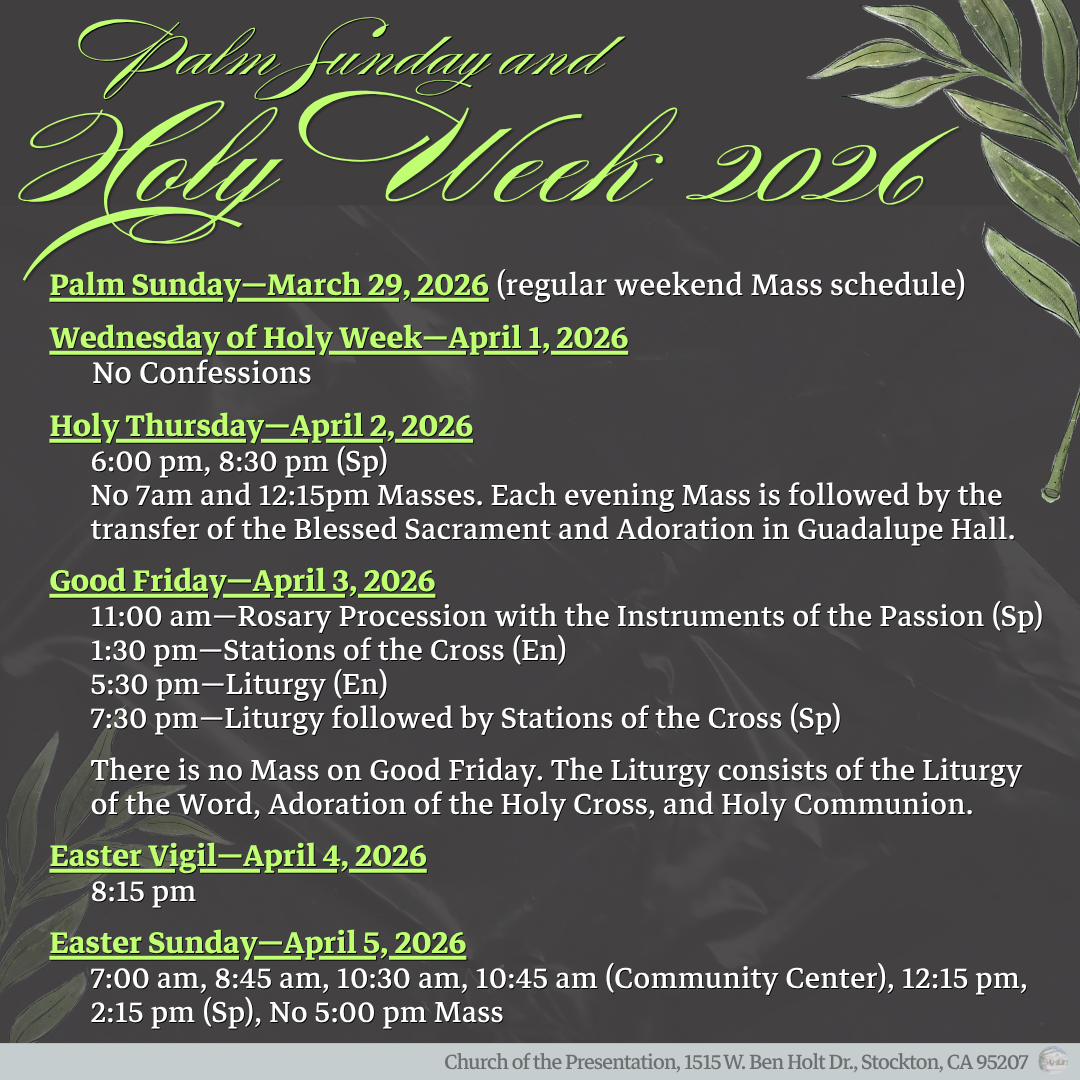
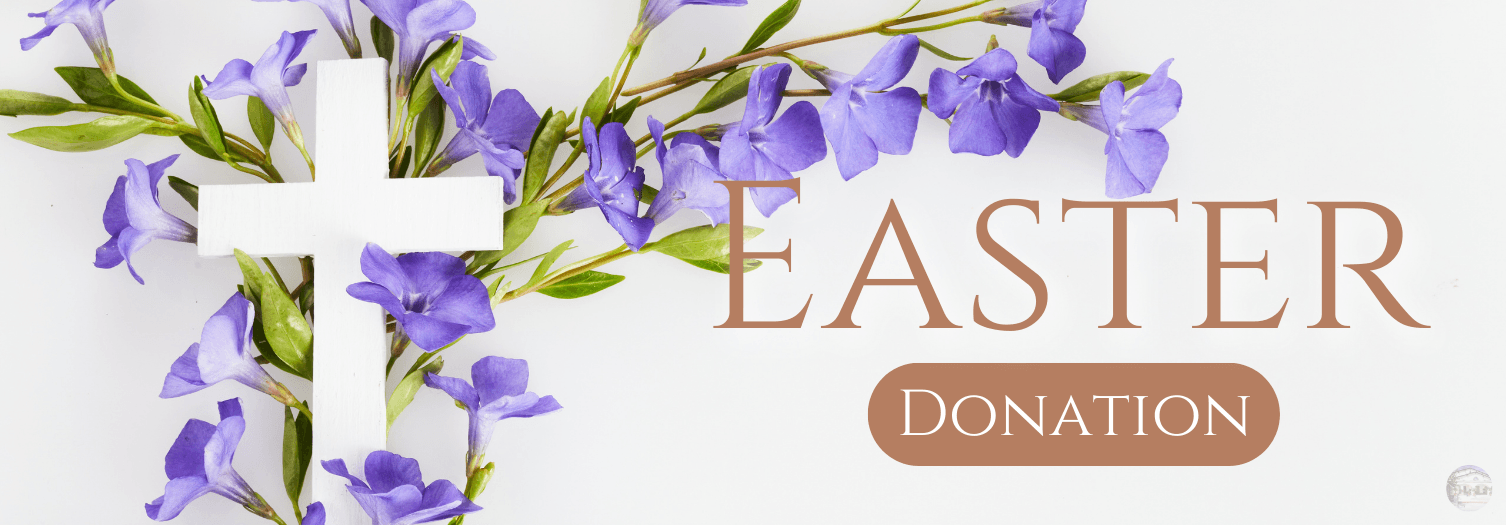
If you would like to make your Easter donation online, please click the 'Easter Donation' picture. Thank you for being a blessing to the Presentation of the Blessed Virgin Mary Catholic Church!
Si desea realizar su donación de Pascua en línea, por favor haga clic en la imagen de «Donación de Pascua». ¡Gracias por ser una bendición para la Iglesia Católica de la Presentación de la Santísima Virgen María!
LENT - RESOURCES IN ENGLISH
Small Group Reflection Guide: This weekly guide features Lenten readings, reflections from Pope Leo XIV, and questions for sharing and listening. Click here for guide.
FORMED
Not yet on FORMED?
- Visit http://signup.formed.org/.
- Enter our parish’s zip code or name.
- Enter your name and email.
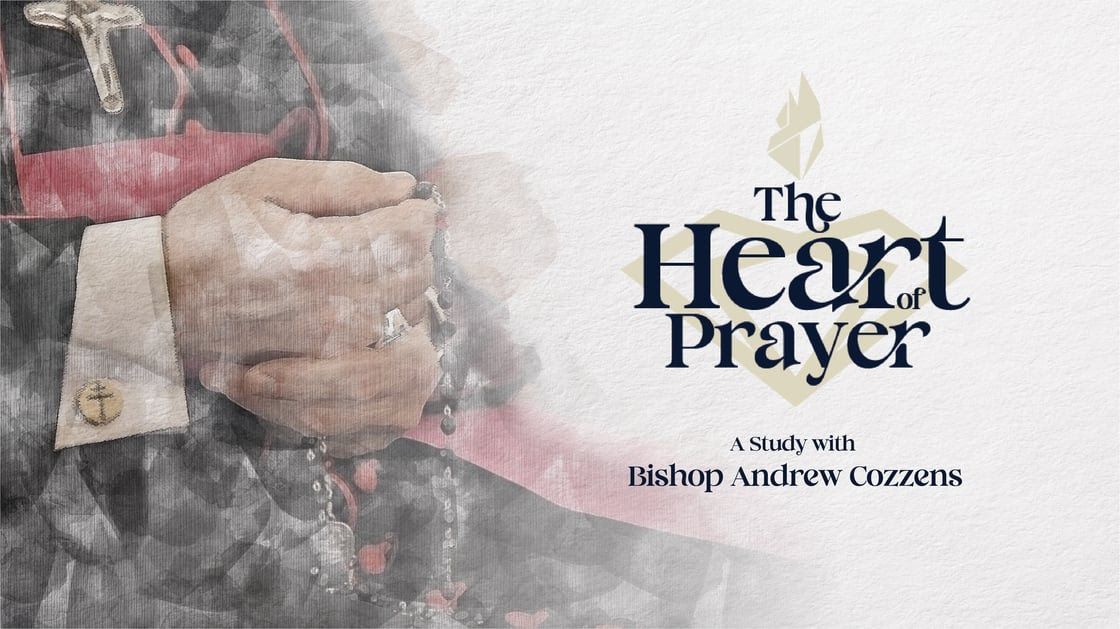
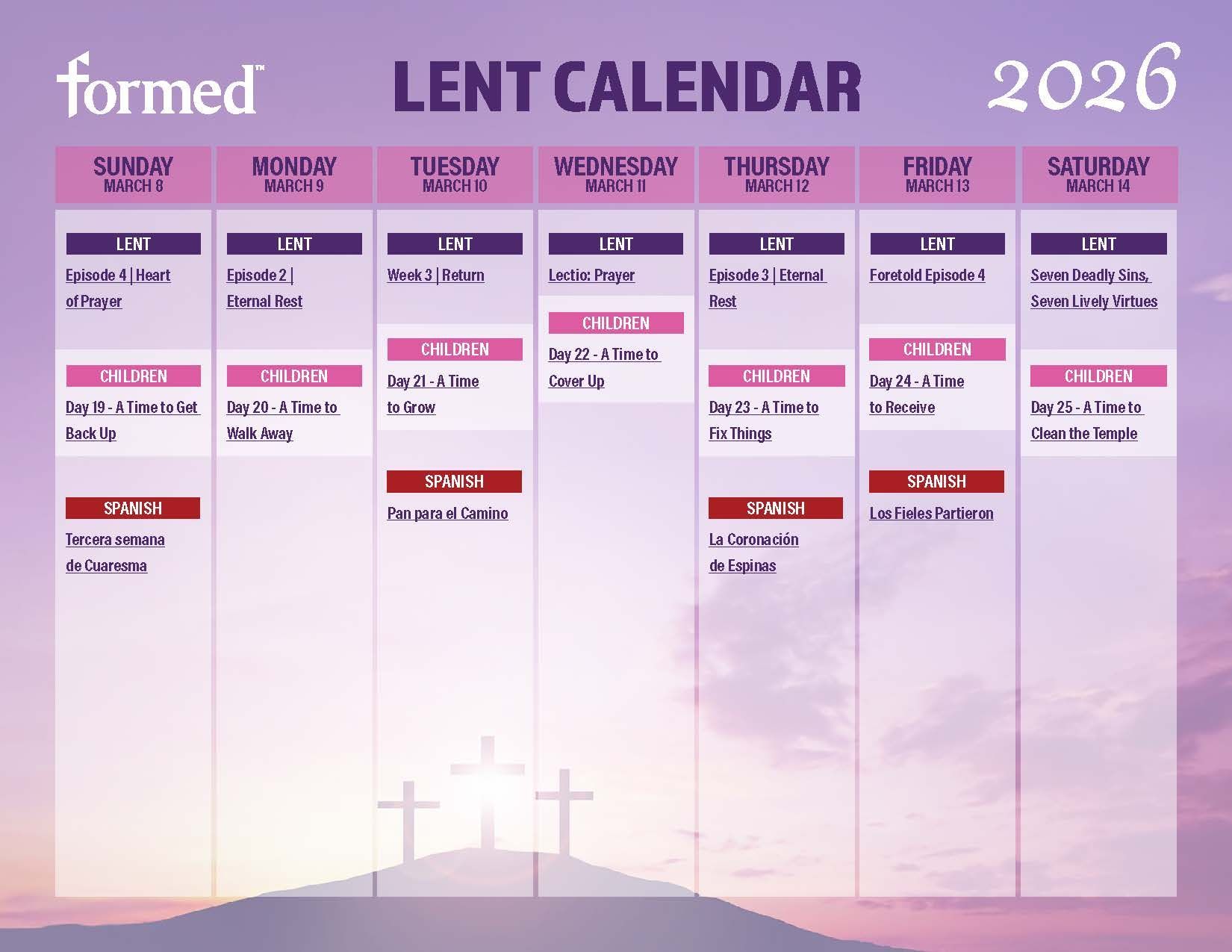
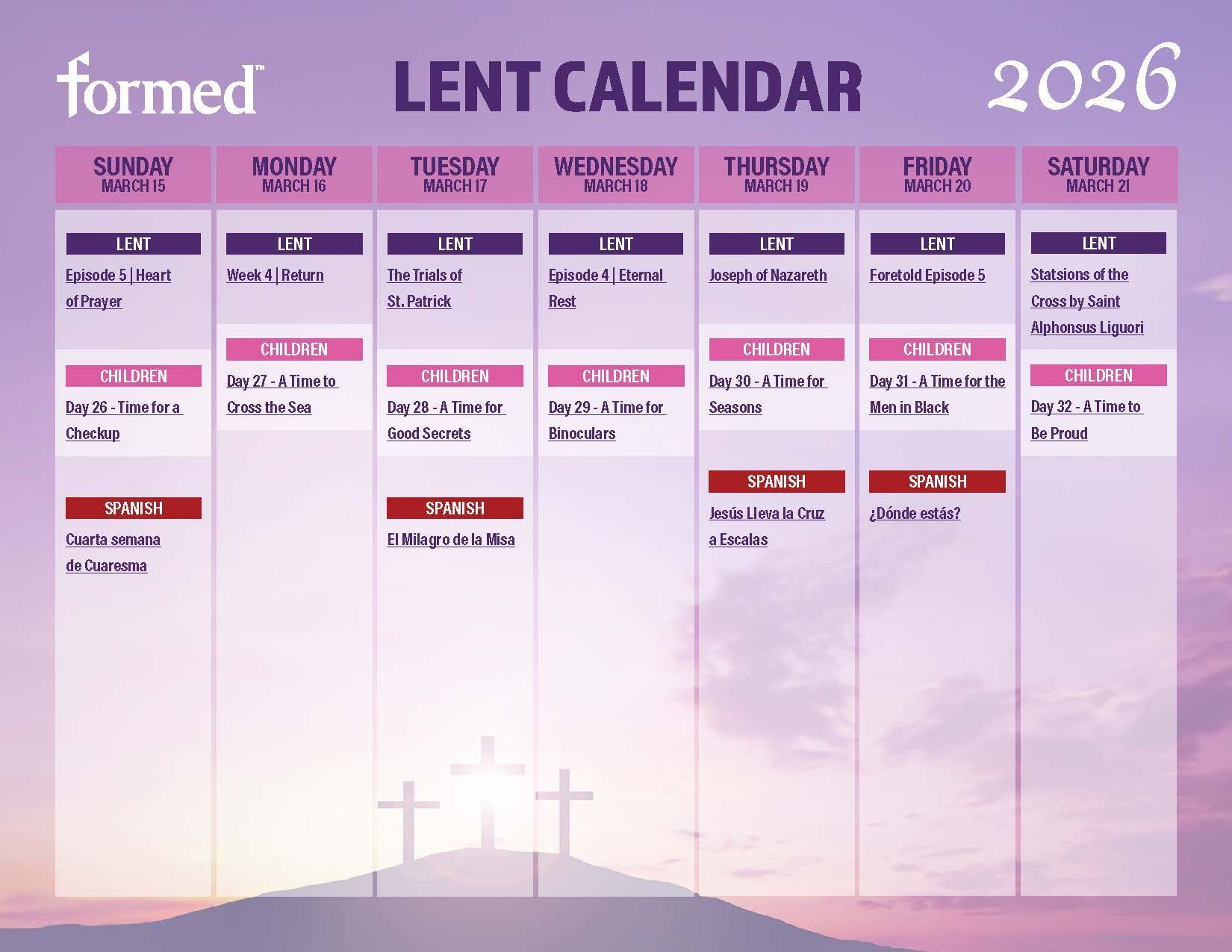
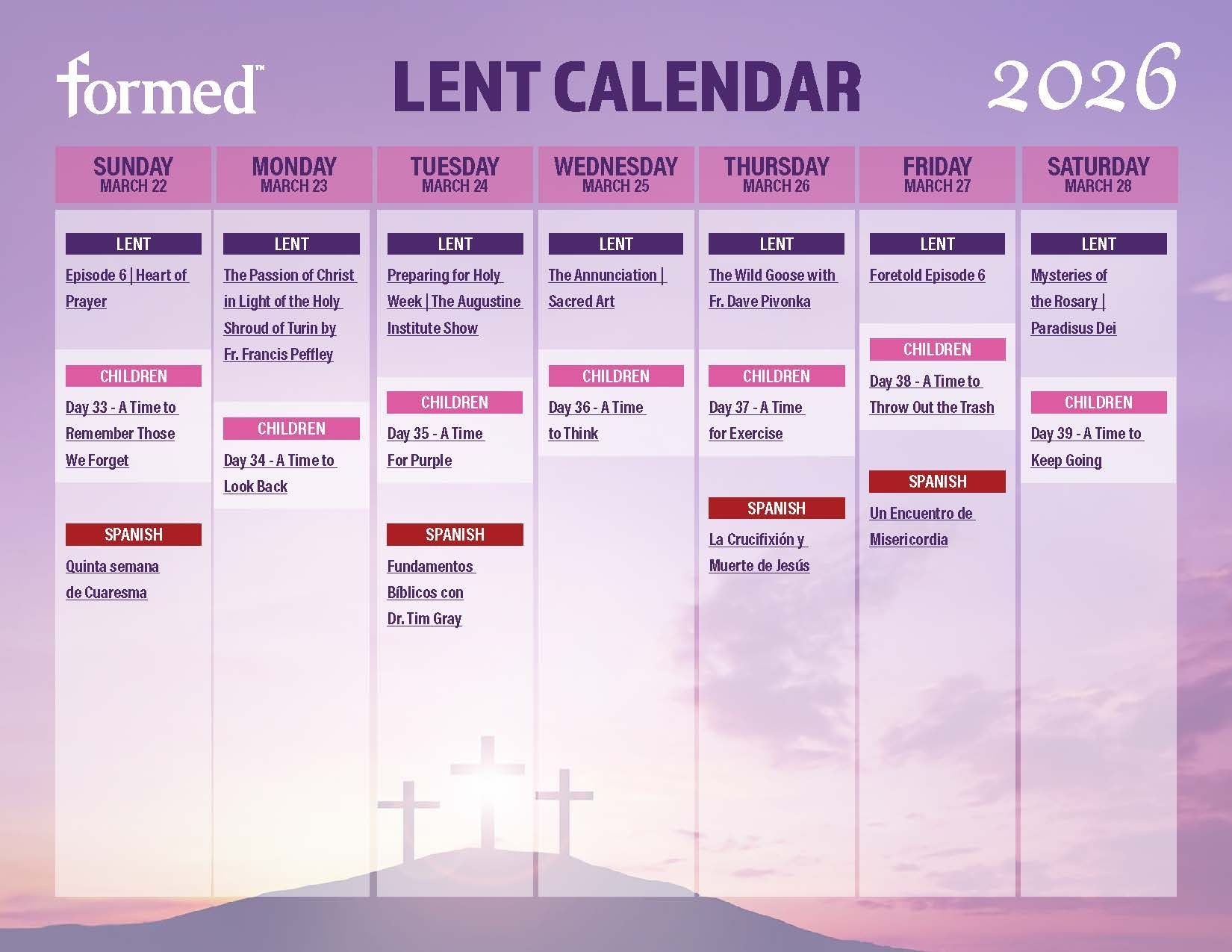
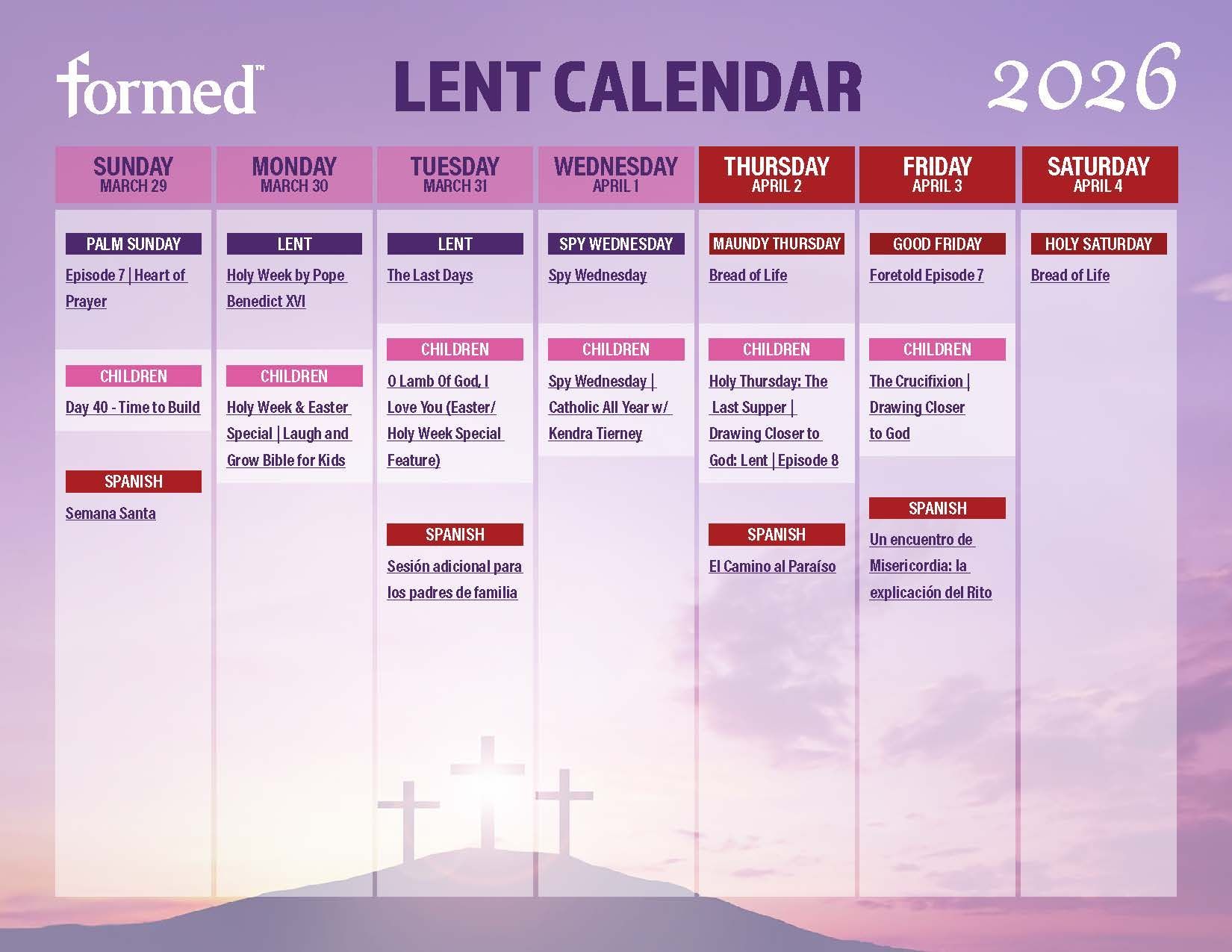
FORMED — “The Heart of Prayer”: Hear God's voice in new ways as Bishop Cozzens walks you through the beauty and transcendence of prayer. Drawing from sacred scripture and the life of the saints, Bishop Cozzens shares guidance and reflection that will change the way you approach prayer in this holy season. This year, you can have a transformative Lent. Are you ready to begin?
Sign up now to receive Lenten content that draws you closer to
Jesus in prayer. To be transformed this Lent through this series, click here.
PRESENCE: THE MYSTERY OF THE EUCHARIST
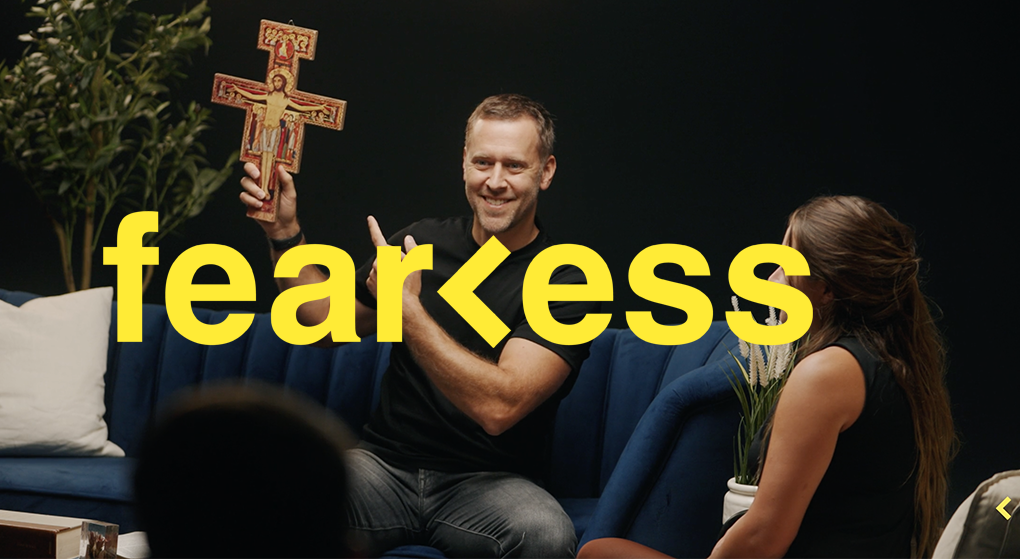
FEARLESS
Set to release on Ash Wednesday, Fearless will help you make this Lent impactful and spiritually fruitful. This new seven-part series is brought to you in partnership with Real Life Catholic and FORMED.
Time and again, the people of God are called to be courageous and "be not afraid." Yet we live in a time where fear seems to guide our very existence. Don’t miss this exciting series with a special weekly guest as we follow Jesus into the wilderness.
FORETOLD
Our world is full of noise. Often, that noise is loud and negative. When was the last time you heard something good on the news? Because of the constant intake of “bad news,” many people no longer believe in the Providence of God, nor trust that he has a plan for us.
Maybe this is you. Perhaps you think God doesn't have a plan for you and your family. But Jesus is the Lord of History, yours included. What was promised in the biblical story came to pass through Jesus, his apostles, and the Church. Ultimately, this biblical history is your history. Just as the prophecies of the Old Testament were fulfilled, you can trust that Jesus will care for you and your story. Encounter this profound mystery and reality for yourself in Foretold.
DIVINE MERCY IN THE SECOND GREATEST STORY EVER TOLD
WHOLE 40: MAKING A SPIRITUAL PLAN FOR LENT
Make a plan for this holy and grace-filled season. Sit down with Dr. Ben Akers and Dr. Elizabeth Klein to discuss the purpose of the season of Lent, how to prepare for it, and why it is such a fruitful season in our life of faith.
Click the button below to sign up for Daily Lenten Reflections with Dr. Tim Gray as he opens up the Scriptures throughout this holy season.
DAILY REFLECTIONS
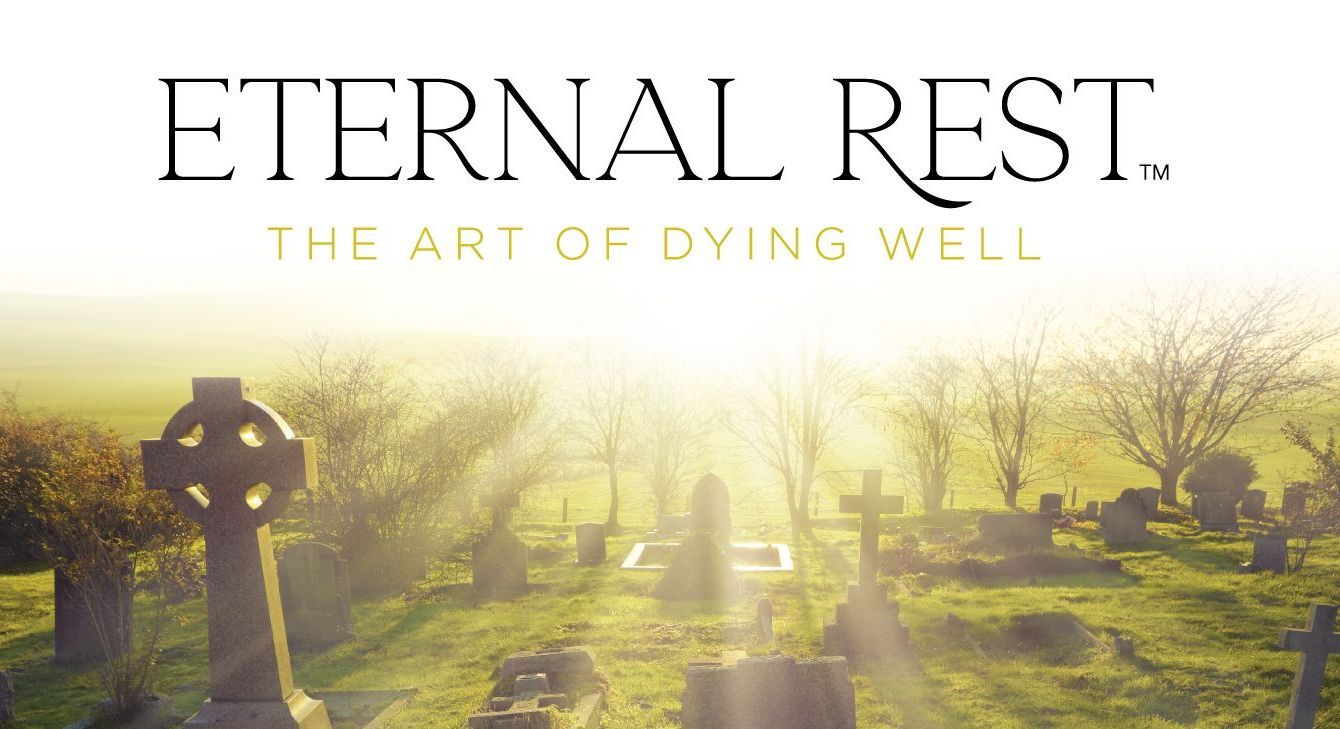
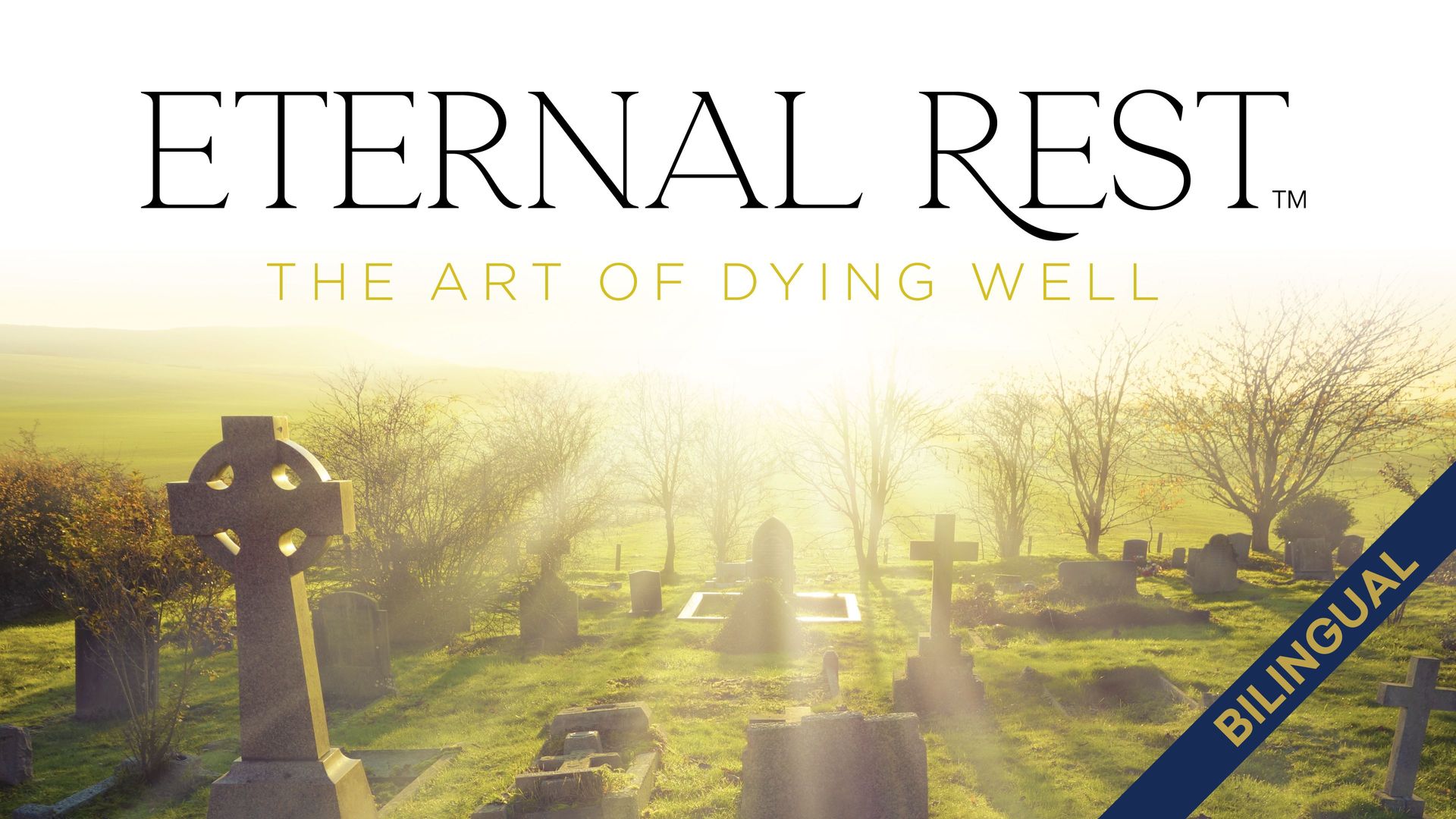
ETERNAL REST: THE ART OF DYING WELL
We all have very real questions about death. What happens when we die? What does Scripture teach about death? How do we prepare for the life to come? Explore the mystery of death, dying, and everlasting life through Eternal Rest, a new offering of the Augustine Institute.
Eternal Rest examines the origin of death, the afterlife, and the powerful reality around the sacrament that ushers us into eternal life. Eternal Rest presents the Catholic Church’s teaching about death and God’s response to it with wisdom and truth, gentleness and compassion, so we can think about and prepare for death in the light of Jesus Christ, the Author of life.
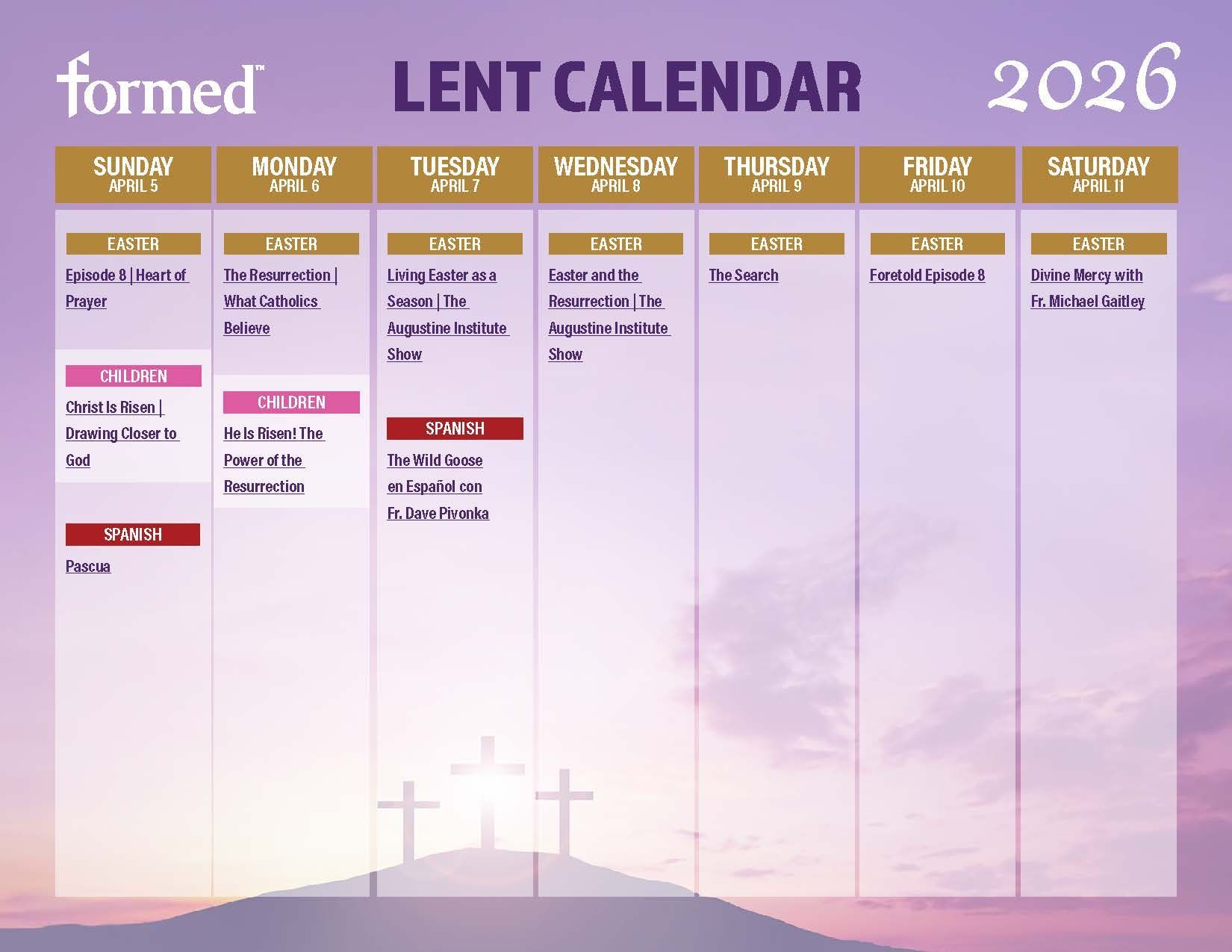
PASCUA - RECURSOS EN ESPAÑOL
Los Pilares de la Cuaresma: Ayuno | Limosna | Oración
Ayuno
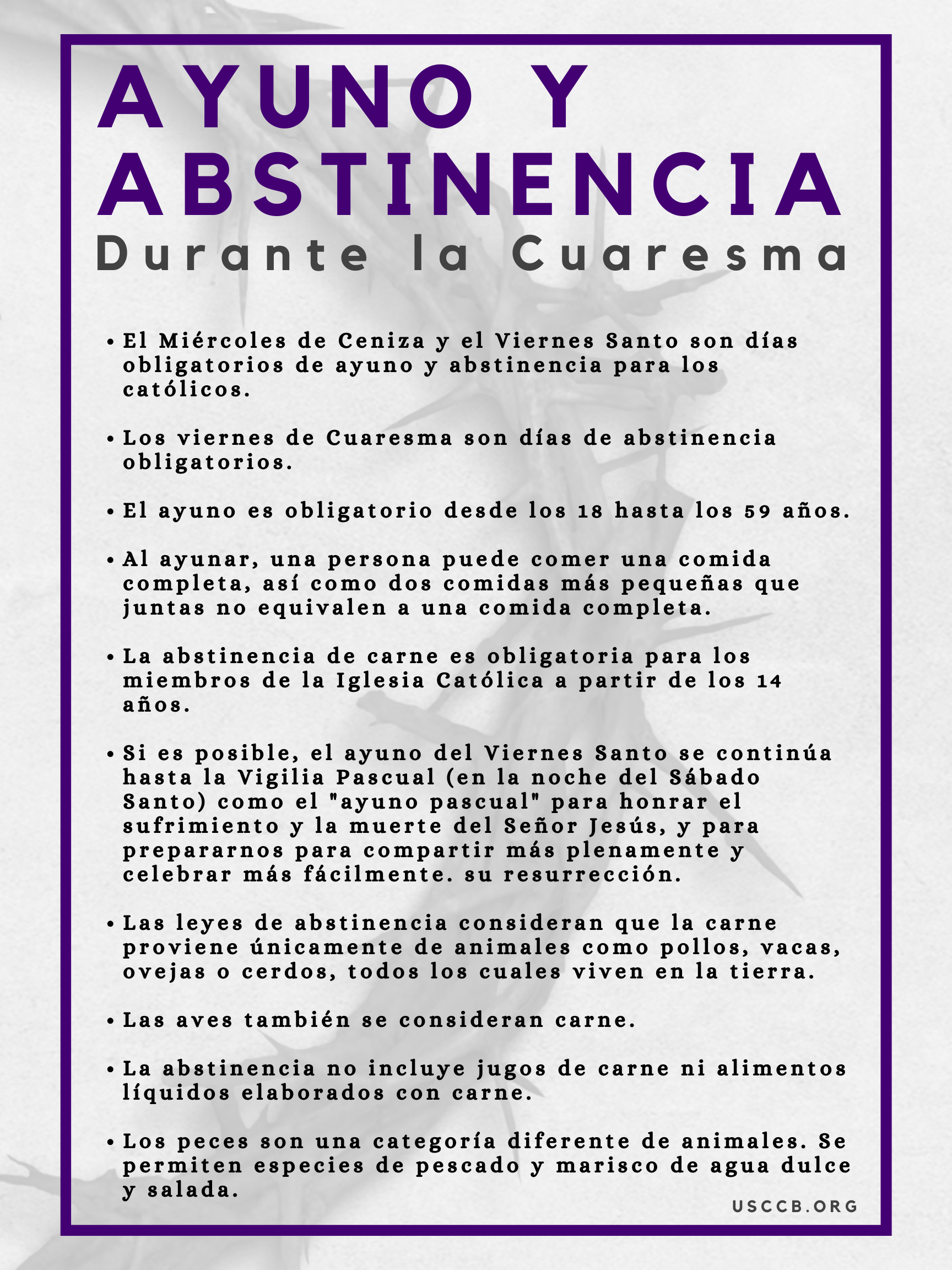
Pilar Cuaresmal del AYUNO
A partir del Miércoles de Ceniza y todos los viernes de Cuaresma, todas las personas mayores de catorce años están sujetas a la ley de abstinencia: no comer carne.
El Miércoles de Ceniza y el Viernes Santo, todos los que tengan dieciocho años y menos de cincuenta y nueve también están sujetos a la ley del ayuno. El ayuno en estos días significa que solo podemos disfrutar de una comida completa sin carne. Si es necesario, se pueden consumir algunos alimentos en las comidas habituales, pero combinados deben ser menos que una comida completa. Se permiten líquidos en cualquier momento, pero no se deben consumir alimentos sólidos entre comidas.
¿Por qué no comer carne los viernes?
Cada semana de Cuaresma, el Ministerio de Salud presentará una receta saludable sin carne. Cada feligrés que no coma carne todos los viernes de Cuaresma podrá participar en el sorteo de un certificado de regalo de $100 para Metropolitan Market.
No comer carne todos los viernes de Cuaresma no solo es bueno para el alma, sino también para el cuerpo.
El ayuno puede llevar a la limosna
Se anima a abstenerse voluntariamente de otros alimentos o a hacer una ofrenda a la caridad del dinero que de otro modo se habría gastado en comida o bebida.
Considere donar el dinero ahorrado a la Campaña Ministerial del Obispo. Puede hacer su promesa o donar por haciendo clic aquí.
(No olvide seleccionar "2026 - Presentation Church, Stockton" como la parroquia a la que está realizando su donación).
Limosna
Pilar Cuaresmal de la LIMOSNA
Cuando pensamos en la limosna, pensamos en donar dinero. La limosna va más allá del dinero que podríamos donar a la Campaña Ministerial del Obispo cuando renunciamos a comer en restaurantes durante la Cuaresma. Puedes hacer tu promesa o donar por haciendo clic aquí. (No olvide seleccionar "2026 - Presentation Church, Stockton" como la parroquia a la que está realizando su donación).
La limosna abarca nuestro tiempo y talento, entregados libremente para ser Jesús disfrazado. Jesús se identificó con nuestros hermanos y hermanas más pobres.
Oración
Pilar de ORACIÓN de Cuaresma
A menudo, el pilar más olvidado de la Cuaresma es la oración. Hay muchísimas maneras maravillosas de orar durante la Cuaresma. Dedicar más tiempo a la oración durante la Cuaresma nos acercará más al Señor y nos permitirá encontrarnos con él. Podemos orar especialmente por la gracia de vivir nuestras promesas bautismales más plenamente. Podemos orar por los elegidos que serán bautizados en Pascua y apoyar su camino de conversión con nuestra oración. Podemos orar por todos aquellos que celebrarán el sacramento de la reconciliación con nosotros durante la Cuaresma, para que se renueven verdaderamente en su compromiso bautismal.
Penitencia
¿Te has confesado últimamente? Consulta la guía "Cómo confesarse", que incluye un examen de conciencia, una explicación del sacramento (¿se llama Penitencia? ¿Reconciliación? ¿Confesión?) y más. Haz clic aquí para ver la guía.
Guía de reflexión para grupos pequeños: Esta guía semanal presenta lecturas de Cuaresma, reflexiones del Papa León XIV y preguntas para compartir y escuchar. Haga clic aquí para ver la guía.
FORMED
¡Disfruta de FORMED de manera fácil y gratuita!
- Ingresa a http://signup.formed.org/.
- Selecciona tu parroquia
- Inscríbete usando tu nombre y correo electrónico
- Revisa tu correo y sigue la liga para que comiences a usar FORMED
¡Que Dios los bendiga durante esta temporada especial!
PRESENCE: THE MYSTERY OF THE EUCHARIST
PRESENCIA: EL MISTERIO DE LA EUCARISTÍA
¿Por qué es tan especial la Eucaristía para los católicos? Aun cuando a simple vista solo parece ser pan y vino, es en realidad la "fuente y cumbre" de la vida cristiana. Presencia: El Misterio de la Eucaristía explora la verdad y la belleza de la presencia real de Cristo en la Eucaristía, desde sus orígenes en la Sagrada Escritura, hasta su profundo rol en la vida de la Iglesia y sus miembros. Es el crescendo de la Historia de Salvación.
THE WILD GOOSE - DISCOVERING A DEEPER RELATIONSHIP WITH THE HOLY SPIRIT
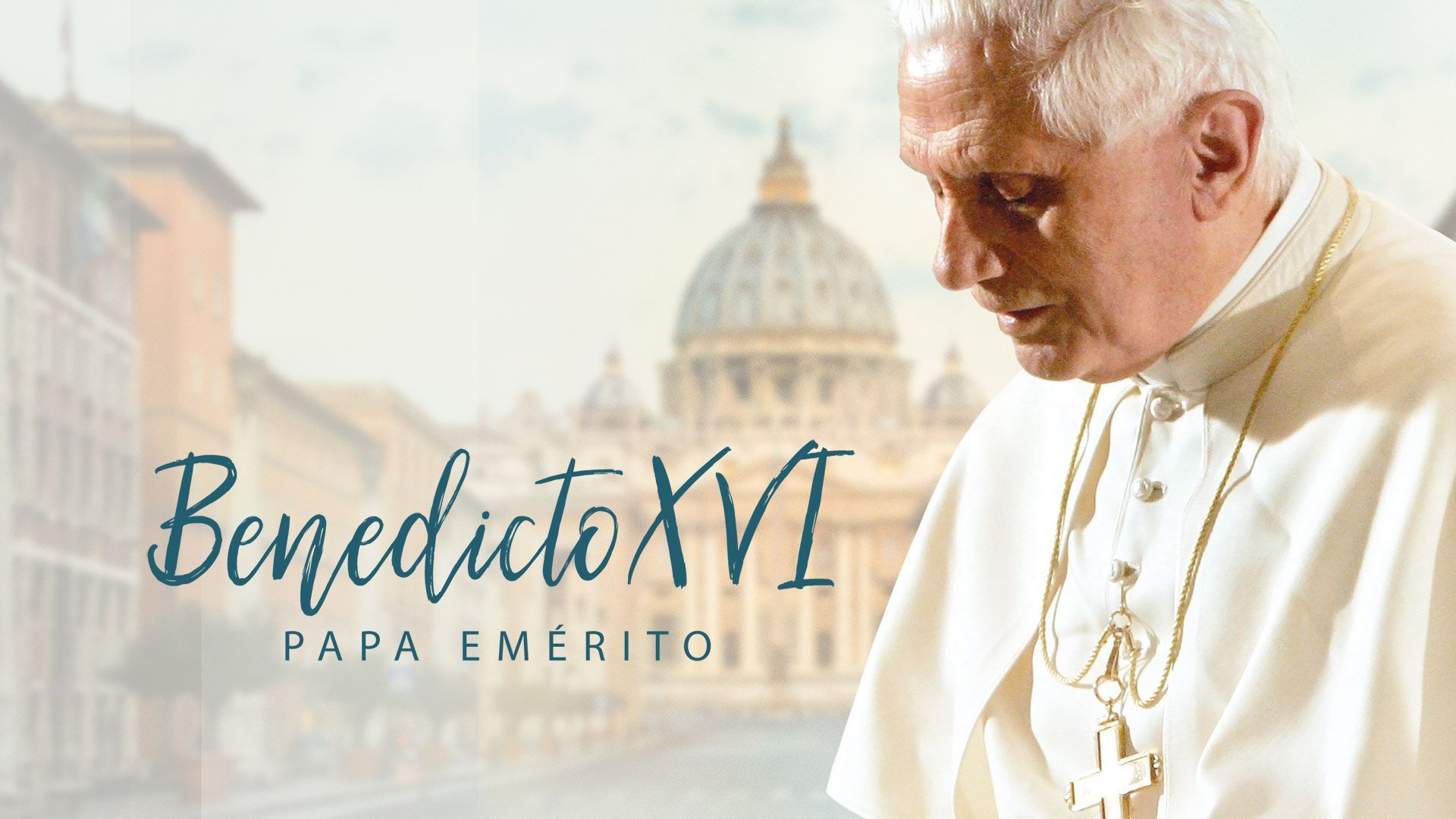
BENEDICTO XVI: PAPA EMÉRITO
Este nuevo y excelente documental producido y filmado en Europa, nos relata la vida y papado del Papa Benedicto XVI (Joseph Ratzinger). Nos habla acerca de los grandes acontecimientos de su vida; su reconocimiento como profesor de teología, experto creador del Concilio Vaticano II, así como su colaboración en el pontificado del Papa San Juan Pablo II. Su pontificado terminó a la edad de 86 años con su inesperada renuncia y fue marcado también por sus grandes batallas en defensa de la fe y por la transparencia de la Iglesia, que provocaron al mismo tiempo apoyo y críticas a su pontificado.
Para este gran hombre de la Iglesia, su vida fue un largo Vía Crucis que terminó con una lección magnánima de humildad, para dar paso a su sucesor.